Golden Valley, AZ · updated 2026-08-26
Fence installation in Golden Valley, AZ
Golden Valley sits outside Kingman city limits in unincorporated Mohave County, where fence rules cap residential front yards at 4 feet and require any view-obscuring fence to be at least 6 feet, as of 2026-08-26. Larger lot sizes here also make ranch and livestock fencing a much bigger part of the picture than it is in town.
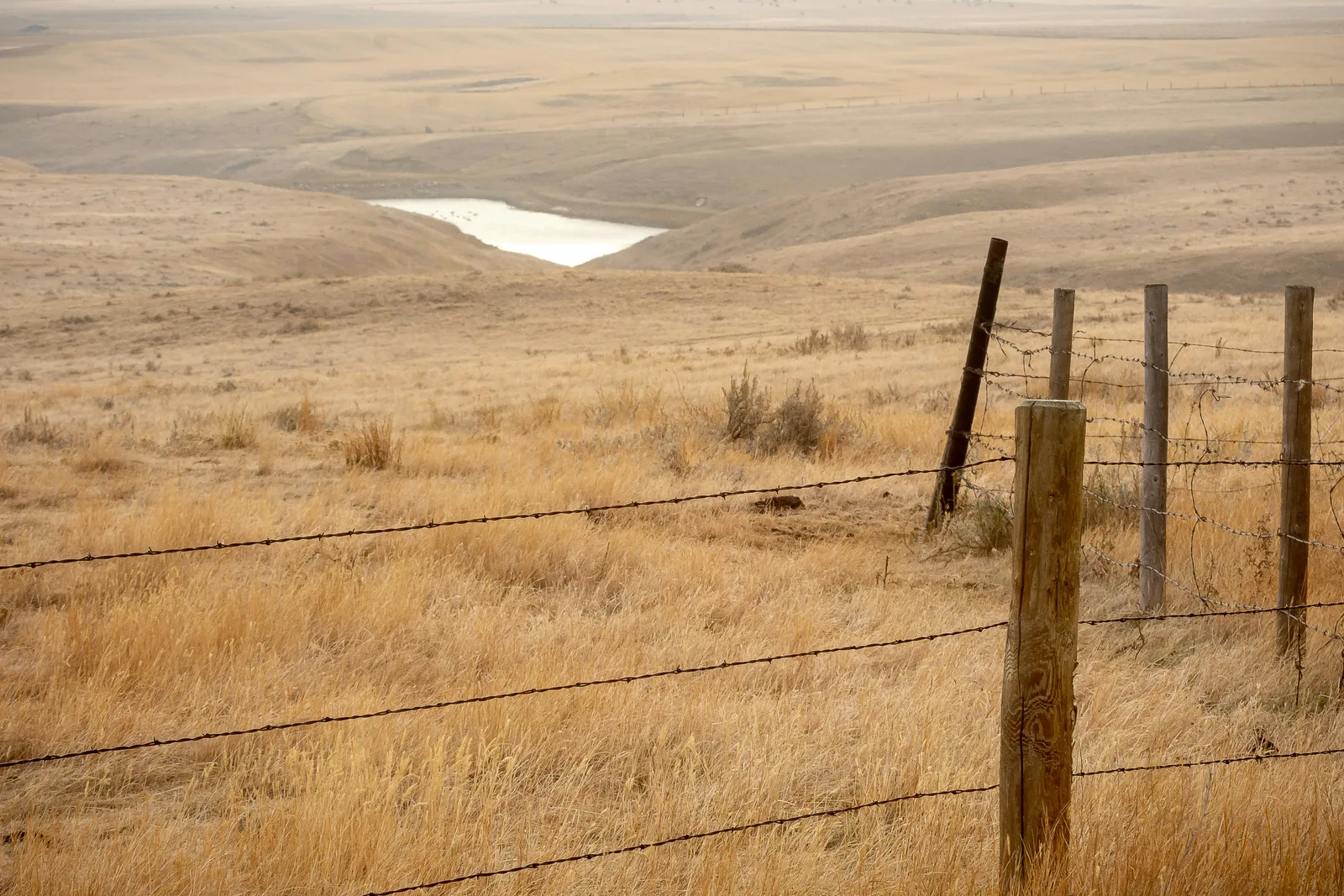
Why Golden Valley fencing is different from in-town Kingman
Golden Valley is unincorporated county land, not a City of Kingman neighborhood — a Kingman ZIP code on your address doesn't put you under city zoning. County rules (Mohave County Section 27) govern fence height, materials, and permits here instead of the city code. Lot sizes also run larger on average, with a meaningful share of acreage and ranch-style parcels where livestock fencing is a real part of the market — a different job than a standard residential backyard fence.
Mohave County fence rules that apply here
Front yard
4 ft cap
Standard residential districts; taller requires Traffic Safety Committee review.
View-obscuring fence
6 ft minimum
Plastic sheeting, shade cloth, used garage doors, and non-remanufactured recycled sheet metal are barred materials.
Permit
Only for commercial/industrial >$500
Typical residential and ranch fencing generally does not need a building permit.
Confirm your district
Mohave County Planning & Zoning
928-757-0903 — zoning specifics vary more by district here than inside the city.
(KGM-011) See the full rules & permits page for the City of Kingman comparison and the jurisdiction test.
Ranch & livestock fencing
Barbed wire and woven-wire fencing are the standard for acreage and livestock containment in Golden Valley. As of 2026-08-26, installed cost for a livestock-grade barbed wire fence (3–5 strand) runs about $3–$6 per linear foot, or roughly $2,000–$2,200 per acre — larger jobs typically price lower per foot than small ones. A typical residential-to-small-ranch project runs $1,500–$5,800 total. For acreage, the useful unit is boundary length rather than area: HomeGuide puts a 10-acre parcel at 2,650–2,800 linear feet of boundary and $5,000–$6,000 average installed. Two 10-acre parcels of different shapes can differ meaningfully in fence footage — a long, narrow parcel costs more to enclose than a square one of the same acreage.
Barbed wire is more tightly restricted inside Kingman city limits (height and placement rules, KGM-016) — it's primarily a Golden Valley / unincorporated-county option for a reason.
Residential fencing in Golden Valley
For a standard residential lot rather than acreage, the same materials used in Kingman apply — chain link, wood privacy, vinyl, and wrought iron/aluminum. See the full cost guide for per-material pricing and the material comparison for which one fits high-desert wind and sun.
A published Golden Valley-area estimate (Homeyou, updated mid-2026) puts a typical project at $2,735–$3,737, with a much wider range observed ($1,227–$5,807) than Kingman's in-town figure — a reflection of the mix of small residential lots and larger acreage parcels here, not a data error.
Fencing acreage is a different job, not a bigger one
A residential backyard fence and a boundary fence across several acres share almost nothing beyond the word "fence." What changes:
Corners carry the fence
On a wire fence, tension is the structure. Corner and end assemblies — braced, and set far more substantially than line posts — are what hold that tension, and they are where a wire fence fails first. A quote that prices only per foot without describing the corner and brace assemblies is not describing the part that matters.
Boundary length, not acreage
Fencing is sold by the foot and land is sold by the acre, and the conversion depends on shape. A 10-acre parcel runs roughly 2,650–2,800 feet of boundary — but a long, narrow 10 acres carries considerably more fence than a square one. Measure the actual perimeter before budgeting.
Gates, access, and cattle guards
Acreage usually needs a vehicle gate wide enough for equipment and a truck with a trailer, and sometimes a cattle guard at the drive instead. Both fall inside the Arizona ROC fencing classification (R-14 / C-14 / CR-14), along with automatic gate operators — so a licensed fencing contractor is the right trade for all of it. (AZ-006)
Terrain and access for equipment
Washes, rock, and grade changes along a boundary all slow a job down, and how far a crew has to travel to reach the far corner of a parcel is a real line in the labor. Walk the boundary with whoever is quoting rather than doing it from a map.
Barbed wire: a county option, effectively not a city one
This is one of the clearest practical differences between the two jurisdictions, and it is worth stating precisely because it runs the opposite way to what people assume.
Inside Kingman city limits, barbed wire is capped at 5 feet and allowed only on side or rear property lines of residential lots of 40,000 square feet or larger, or on any property line in Rural Residential (R-R) or Recreational Open Space (ROS) zoning districts. In other words it is a large-lot-and-specific-zone allowance, not a general option. (KGM-016)
Unincorporated Mohave County carries no equivalent city-only lot-size restriction, which is why ranch and livestock fencing is an ordinary part of the picture here and an unusual one a few miles away. Confirm your own zoning district with Mohave County Planning & Zoning before assuming — district-level variation is wider outside the city than inside it. (KGM-011)
The wind-and-dust option most people don't know they have
On an exposed parcel where the goal is breaking wind and blown dust rather than privacy from a neighbor, a taller solid fence is usually the wrong tool — it presents a large sail on posts that have to resist all of it. Mohave County treats earthen berms as their own category, with standards that make them viable here and unavailable on a standard in-town lot: a 5-foot minimum setback for a constructed berm, permitted only on lots larger than 2.5 net acres, with a maximum design slope of 1½:1. Natural berms carry no minimum setback. (KGM-011)
A berm plus a lower fence can do work a taller fence cannot, without fighting the wind for it. The acreage floor rules it out for most parcels — which is exactly why it is worth knowing about on the ones where it applies. Full detail on the county standards is in the county height rules guide, and high-desert wind and your fence explains why solid barriers struggle here.
If it's a house, not a ranch
Plenty of Golden Valley property is ordinary residential, and for those lots the material questions are the same as in town — with three local differences worth planning around.
- Permits are lighter. The county's building-permit trigger is commercial or industrial perimeter fencing over $500 in construction cost, so most residential work sits outside it — unlike inside city limits, where most fences need a Minor Improvement Permit. Lighter paperwork does not mean the height and material rules stop applying. (KGM-011, KGM-016)
- Easements are more common. Access and utility easements across larger parcels are ordinary here, and a fence across one can be removed by the easement holder. Check the title report before setting a line — see property lines.
- Exposure is higher. Lots are generally more open than in town, which means more wind on whatever you build. Footings matter more here, not less.
Materials and per-foot pricing are the same as the Kingman tables — see the material guide and the cost guide.
Getting a quote you can actually compare
Acreage quotes vary more than residential ones because there are more ways to build the same fence. Ask every bidder for the same five things in writing: the measured boundary length they priced, the line-post spacing, the corner and brace assembly detail, the number and type of gates, and whether clearing the fence line is included. Then compare.
And verify the ROC license before you sign — a fencing classification is R-14, C-14 or CR-14, and it takes about ninety seconds to check. Here is the walkthrough. (AZ-006, AZ-010)
Barbed or woven — what you're containing decides it
Barbed wire and woven wire get quoted almost interchangeably and do different jobs. Barbed strands work by discouraging animals that respect a barrier — cattle and horses, broadly — and are the cheaper option per foot. Woven or field wire creates an actual physical mesh and is what smaller stock, goats and sheep among them, generally requires, because a strand fence is something they go through rather than something that stops them. Wire spacing within a woven fence is graded for the animal it is meant to hold.
Tell whoever quotes the job what will be inside the fence and what you are keeping out. A boundary fence, a horse fence, and a goat fence are three different builds at three different prices, and "ranch fencing" on a quote does not distinguish between them.
Common questions
Is Golden Valley part of the City of Kingman?
No. Golden Valley is unincorporated Mohave County land — even though it shares a Kingman-area address and ZIP code, it falls under county zoning, not the City of Kingman's zoning code. Fence height and permit rules are set by the county. (KGM-011)
How tall can a fence be in Golden Valley?
Under Mohave County zoning Section 27, residential front-yard fencing is capped at 4 feet, and any view-obscuring fence must be at least 6 feet unless the Board of Supervisors directs otherwise. A building permit is required only for commercial or industrial perimeter fencing over $500 in construction cost — typical residential and ranch fencing generally does not need one. (KGM-011)
What does ranch or livestock fencing cost in Golden Valley?
Barbed wire and woven-wire livestock fencing installs for roughly $3–$6 per linear foot, or about $2,000–$2,200 per acre, with large-acreage jobs pricing lower per foot than small ones. A standard 3–5 strand barbed wire fence typically runs $1,500–$5,800 total for a residential-to-small-ranch-sized project, and a 10-acre boundary (2,650–2,800 linear feet) averaging $5,000–$6,000 installed.
Does Golden Valley cost more or less to fence than in-town Kingman?
It varies more than in Kingman. A published Golden Valley-area estimate runs $2,735–$3,737 typical, with a much wider observed spread ($1,227–$5,807) than Kingman's in-town figure — largely because Golden Valley includes both small in-town-style lots and much larger acreage/ranch parcels, which are two very different jobs.
Free · no obligation
Get a quote for Golden Valley
Tell us whether it's residential or ranch/acreage fencing and your request goes to an independent, licensed Arizona fencing company that works in Golden Valley.
Serving Kingman and Golden Valley, Arizona.