Kingman & Golden Valley, AZ · updated 2026-08-26
Chain link fence installation in Kingman, AZ
Installed chain link runs $32–$71 per linear foot nationally as of 2026-08-26, with most 4–6 ft residential jobs in the $36–$43 range — the lowest-cost common fencing material, and a strong performer against Kingman's wind.
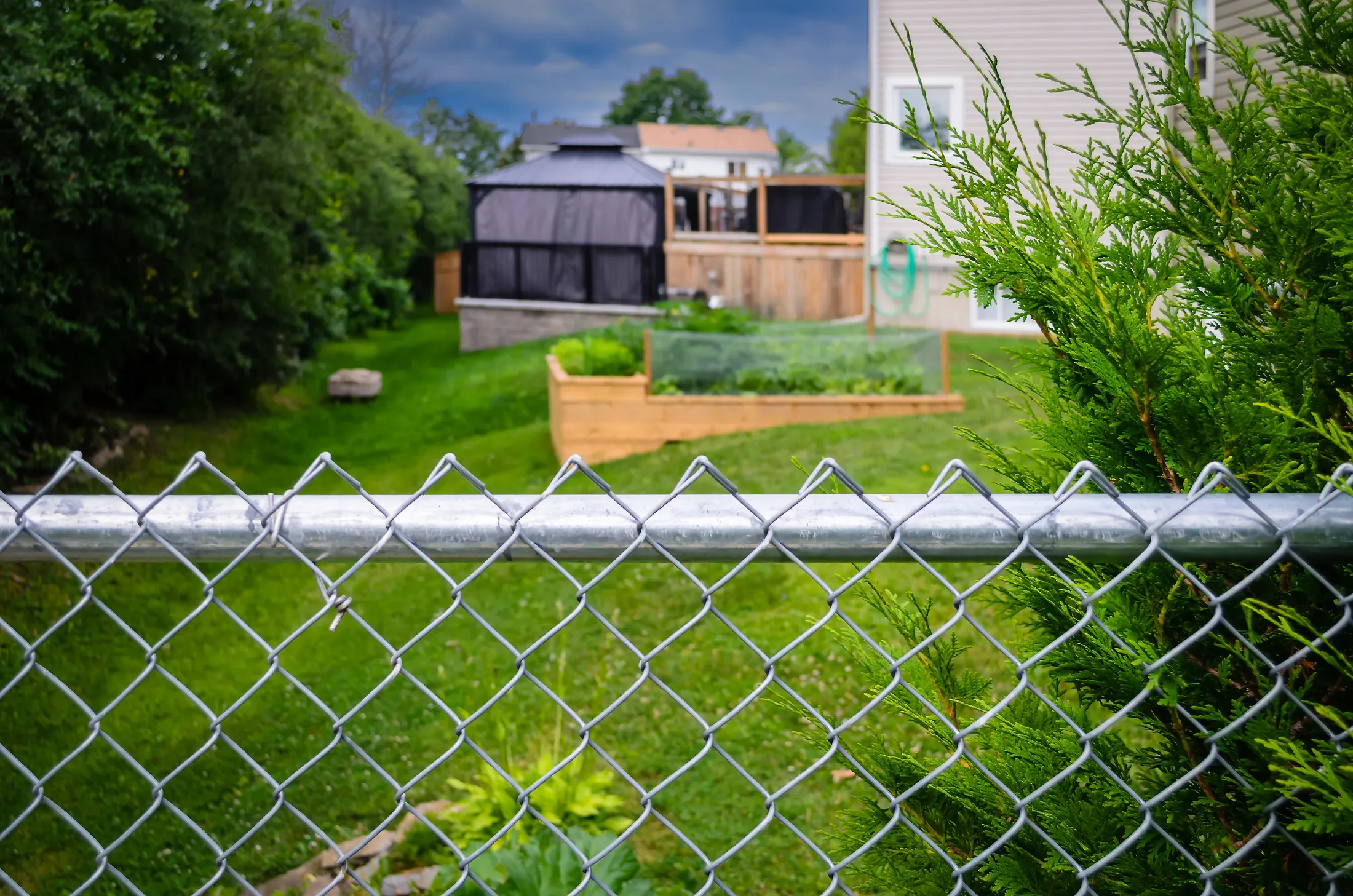
Where chain link fits
Chain link is the go-to choice for perimeter fencing, dog containment, and back-of-lot boundaries where cost and durability matter more than privacy or curb appeal. Its open mesh doesn't catch wind the way a solid panel does, which is a real advantage in exposed high-desert locations, and galvanized coatings hold up well against sun exposure over the long run compared with materials that need periodic sealing or painting.
Cost
Installed, per linear foot
$32–$71
Most 4–6 ft residential jobs: $36–$43/ft. 7 ft: ≈$75/ft. 8 ft: ≈$78/ft. Commercial-spec gauge runs about an 85% premium over residential-spec.
See the full cost guide for how chain link compares to wood, vinyl, and wrought iron, and what changes any material's price.
Height rules for chain link
Chain-link with no slats can reach 4 feet in the front setback inside Kingman city limits — but adding slats makes it a solid fence for code purposes, capped at 3 feet in front. Side/rear is capped at 6 feet either way. In unincorporated Mohave County (Golden Valley and similar areas), front yards are capped at 4 feet and view-obscuring fencing (chain link with slats counts) needs to be at least 6 feet. See the full rules page for the complete breakdown and which jurisdiction applies to your lot. (KGM-016, KGM-011)
What installation typically involves
A typical chain-link installation sets terminal posts (corners, ends, and gate posts) in concrete footings, then line posts at regular intervals, followed by top rail, mesh fabric, and tension wire. In Mohave County's caliche soil, footing work often takes longer than in softer soil types, which is one reason a quote's labor line can vary between properties even at the same footage.
The four numbers that decide what your chain link costs
Chain link looks like a commodity and prices like one — right up until you compare two quotes and find they are for genuinely different fences. Four specifications do most of the work, and none of them is obvious once the fence is standing.
1 · Wire gauge
The thickness of the mesh wire, where a lower number means thicker wire. Residential fabric is commonly specified around 11 or 11.5 gauge; 9 gauge is noticeably heavier and is what you see on commercial and industrial jobs. Heavier fabric resists deformation from impact and from an animal pushing against it, and it is a large part of why the commercial-spec premium below is as big as it is. Ask which gauge is quoted — it is rarely volunteered.
2 · Coating
Galvanized is the default, and the relevant question is whether the fabric was galvanized before or after weaving — after-weave coating covers the cut ends where corrosion starts. Vinyl-coated fabric (usually black or green) adds a polymer layer over the galvanizing, costs more, and reads as far less industrial from the street. In a dry climate the corrosion argument is weaker than on the coast, so this is mostly an appearance and longevity-margin decision here.
3 · Framework
Post diameter and wall thickness, plus whether the fence gets a top rail or a tension wire along the top. A top rail costs more and keeps the fence line straighter over time; top tension wire is cheaper and more common on longer agricultural runs. Terminal posts — corners, ends, and gate posts — are heavier than line posts and carry the tension, so the count of corners on your lot affects the price independently of total footage.
4 · Mesh opening
Typically around 2 inches on residential fabric. Smaller openings cost more and matter if the fence is meant to contain a small dog — or if it is doing any work near a pool, where Arizona's barrier rule turns on whether an opening passes a 4-inch sphere. See the pool note below.
Above 6 feet, and commercial spec
The $32–$71 headline range covers ordinary residential work. Two situations sit well outside it, and both surprise people at quote time.
| Configuration | Installed per linear foot |
|---|---|
| 4–6 ft residential (most jobs) | $36–$43 |
| Typical project, all heights | ≈$44 |
| 7 ft | ≈$75 |
| 8 ft | ≈$78 |
| Commercial spec vs residential | ≈85% more per foot (≈$75 vs ≈$41 at typical) |
Ergeon, 1,408 completed installs across 15 states, updated May 2026. Ranges are compiled from published 2025–2026 Kingman-specific and Arizona cost sources, labelled with how local each source actually is. They are research, not a quote. Verified 2026-08-26.
Note the jump between 6 ft and 7 ft: it is not proportional to the extra foot of fabric, because taller fence needs heavier framework and deeper footings to stand up to the load. That step is worth knowing before you decide a 6 ft fence is "not quite tall enough" — and inside Kingman city limits, 6 ft is the side and rear cap for a solid fence anyway. (KGM-016)
Privacy slats change more than the look
Slats are the cheapest route from an open fence to a private one, and they carry two consequences that are easy to miss.
They change what the code calls your fence. Inside Kingman city limits, chain link with no slats may reach 4 feet in the front setback. Add slats and it reads as a solid fence, capped at 3 feet there. Slatting an existing front-yard fence can therefore put a compliant fence out of compliance without a single post moving. (KGM-016)
They change the wind load. An open mesh lets air through; a slatted one does not. The posts and footings under an existing chain-link fence were sized for the open version, and converting it to a solid face without touching them is one of the more common ways a fence that stood for years suddenly starts leaning. See high-desert wind and your fence.
Gates, maintenance, and lifespan
Gates. Gate posts carry more load than any other post in the fence and should be set heavier and deeper. Swing gates are standard; a driveway opening wide enough for a vehicle usually means either a double swing or a rolling gate, and the price difference between them is significant enough to be worth asking about before the quote is written. Automatic gate operators fall inside the Arizona ROC fencing classification (R-14 / C-14 / CR-14), so a licensed fencing contractor is the right trade for that work. (AZ-006)
Maintenance is genuinely light — no sealing, staining, or painting. What does need occasional attention is tension: fabric ties and tension wire work loose over years of wind, and re-tensioning a sagging run is a small job that prevents a larger one. Walk the line once or twice a year and push on it.
Lifespan is long relative to cost, which is most of chain link's appeal. Failures here tend to be footings and gate hardware rather than the mesh itself, which is why the repair-or-replace question for a chain-link fence usually comes down to whether the posts are still sound.
When chain link is the wrong answer
- You want privacy. Slats are a compromise, not a privacy fence — and they bring the two consequences above. If privacy is the actual goal, compare wood and vinyl and budget for the footings a solid fence needs.
- Curb appeal is the point. Vinyl-coated fabric helps, but ornamental metal is the material people actually mean when they say they want the fence to look good from the street.
- It is a pool barrier. Arizona's barrier rule (A.R.S. §36-1681) turns on height, the 4-inch sphere test, the water setback, and a self-closing, self-latching gate — and local rules can add to it. Do not assume a standard yard fence satisfies it. Take the specifics to the rules page and confirm with City of Kingman Planning & Zoning before relying on any fence as a pool barrier. (AZ-011, KGM-016)
- An HOA governs the street frontage. Recorded covenants frequently restrict chain link in front yards regardless of what the zoning code allows. Check your CC&Rs, not just the code.
Common questions
How much does a chain link fence cost in Kingman, AZ?
Installed chain link nationally runs $32–$71 per linear foot as of August 2026, with most 4–6 ft residential jobs clustering around $36–$43 per foot. A typical 150-ft residential project runs $2,057–$5,092 total, median around $3,021. See the full cost guide for how this compares to other materials.
Is chain link a good fence for Kingman's wind?
Yes — chain-link's open mesh lets wind pass through rather than catching it the way a solid panel fence does, which is one reason it performs well in exposed high-desert locations.
How tall can a chain link fence be in Kingman city limits?
Chain-link with no slats can reach 4 feet in the front setback under the Kingman Zoning Code — chain-link fitted with slats is treated as a solid fence and capped at 3 feet in front. Side and rear are capped at 6 feet for a solid fence. (KGM-016)
Free · no obligation
Get a chain link fence quote
Tell us your footage and gate count and your request goes to an independent, licensed Arizona fencing company serving Kingman or Golden Valley.
Serving Kingman and Golden Valley, Arizona.